
Lab Design - Where to Start
Lab design begins by defining how the laboratory will be used, what hazards are present, and which safety and compliance requirements apply. From there, layout, ventilation, casework, and utilities are planned together to support safe workflows, future flexibility, and long-term operational efficiency across educational, research, and industrial labs.
Define the Purpose and Function of the Lab
Good lab design doesn’t start with furniture catalogs or floor plans. It starts with a blunt question: what is this lab actually going to do? Every smart decision that follows depends on that answer.
Start With the Lab’s Primary Purpose
Function drives form
- Research, teaching, testing, and quality control labs all behave differently
- Educational labs prioritize visibility and durability
- Research labs prioritize containment, flexibility, and specialized equipment
- Industrial labs prioritize throughput, safety, and repeatability
If you skip this step, everything downstream gets more expensive. A clear definition up front prevents rework later—a principle reflected across ICI Scientific’s lab planning approach.
Identify Research, Teaching, or Testing Requirements
Not all lab work is created equal
- Wet chemistry vs. dry analysis
- Biological vs. chemical processes
- Demonstration-based teaching vs. hands-on experimentation
- One-time testing vs. continuous workflows
Each scenario affects hood placement, casework selection, storage needs, and traffic flow. Real-world examples of purpose-driven design can be seen in the ICI Scientific project portfolio.
Account for Chemicals, Equipment, and Utilities Early
Processes determine infrastructure
- Chemical types influence ventilation and storage requirements
- Equipment size and weight affect layout and load ratings
- Utility needs (gas, water, power) define bench and hood locations
- Specialized tools often dictate clearance and service routing
These decisions should be validated using early planning tools and specs available in the ICI Scientific resources library.
Consider User Volume and Daily Workflow
People shape the space as much as equipment
- Class size or staff count affects aisle widths and bench spacing
- Simultaneous users drive safety clearances and egress planning
- Poor assumptions here lead to congestion, safety risks, and lost productivity
ICI supports these evaluations through coordinated system design and product planning found in their laboratory solutions.
Lock the Purpose Before Design Moves Forward
Clarity now saves money later
- Undefined scope leads to layout revisions
- Layout revisions trigger mechanical and electrical changes
- Late changes increase project cost and delay schedules
Defining purpose early gives architects, facilities teams, and vendors a shared direction. For ongoing guidance, industry insights, and planning support, visit the ICI Scientific Blog or connect with experts through the dealer locator.
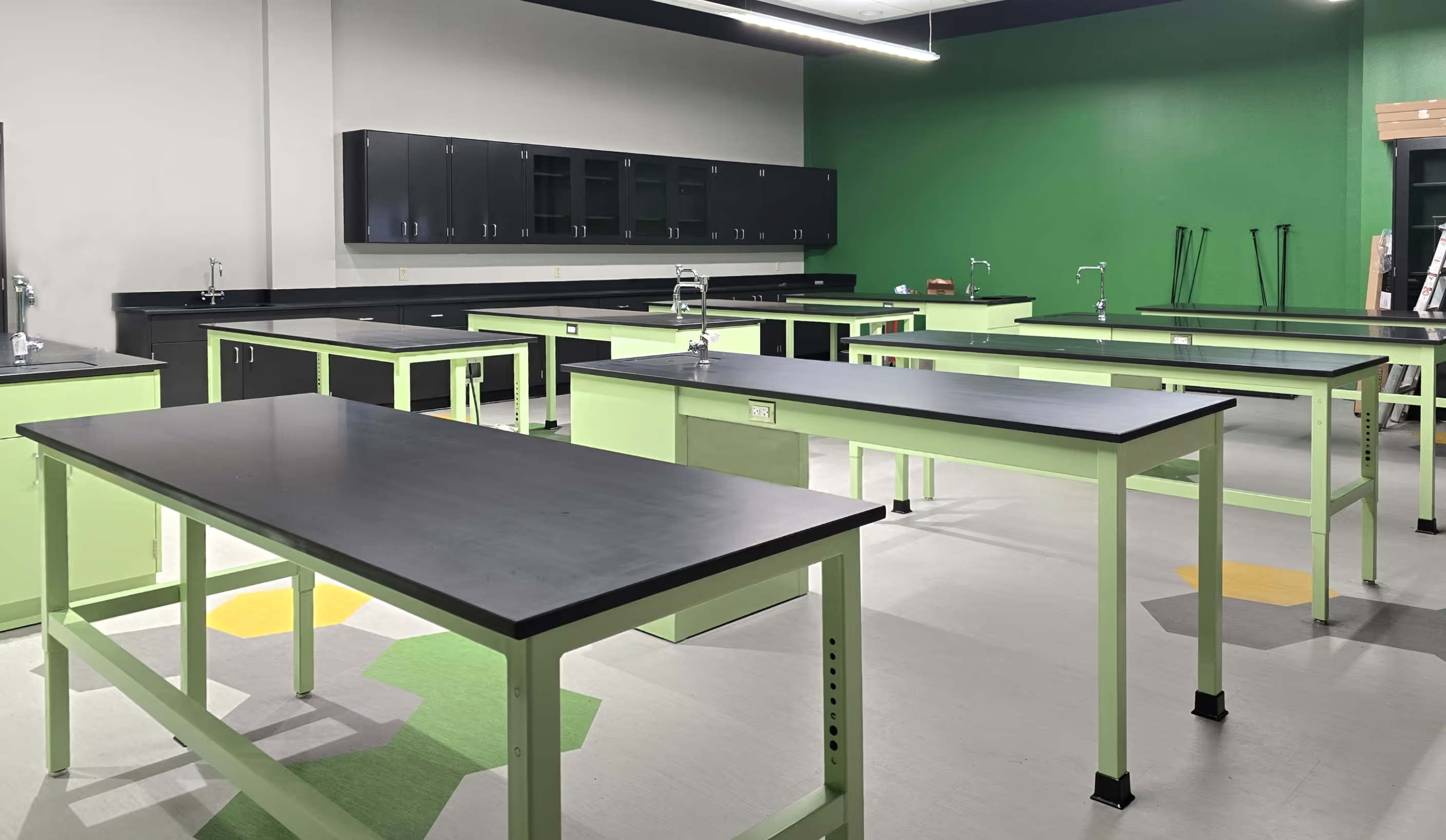
Understand Safety, Compliance, and Regulatory Requirements
Before a single cabinet is placed or a bench is specified, lab design is already constrained by safety and compliance. These requirements don’t decorate the layout—they define it. Miss them early, and the project pays for it later.
Safety Requirements Drive the Entire Layout
Compliance sets the boundaries
- Ventilation requirements dictate hood locations and exhaust paths
- Chemical hazards determine storage zones and separation distances
- Emergency equipment needs clear access and visibility
- Egress paths and clearances must be maintained at all times
These factors shape room dimensions, aisle widths, and work zones long before furniture is selected. This systems-first approach is core to ICI Scientific’s lab design methodology.
Ventilation and Chemical Handling Come First
Airflow and storage can’t be retrofitted easily
- Fume hood placement affects room pressure and HVAC design
- Chemical types influence hood selection and liner materials
- Acid, base, and flammable storage require specific cabinet construction
- Improper early decisions lead to costly mechanical rework
Examples of labs designed with ventilation and containment addressed first can be found in the ICI Scientific project portfolio.
Emergency Equipment and ADA Accessibility Are Non-Negotiable
Accessibility and response time matter
- Eyewash stations and safety showers must meet reach-time requirements
- Equipment placement must remain unobstructed
- ADA accessibility impacts bench height, aisle spacing, and controls
- Compliance affects not just users—but inspectors
These considerations influence casework height, adjustable systems, and layout flexibility available through ICI Scientific’s product offerings.
Codes and Standards Shape Infrastructure
Regulations apply before design preferences
- OSHA, NFPA, ANSI, and local codes establish minimum requirements
- Electrical and plumbing routing depends on code-defined clearances
- Structural needs must support hood loads and equipment weights
- Documentation and testing are required for occupancy approval
ICI helps teams navigate these requirements with technical resources, training programs, and ongoing guidance through the ICI Scientific Blog.
Compliance Should Be Locked Before Furniture Is Selected
Design gets easier once the rules are clear
- Early compliance alignment prevents redesigns
- Furniture selection becomes faster and more accurate
- Project schedules stay intact
For coordinated planning and local support, teams can connect through the dealer locator or start with a systems-level perspective at ICI Scientific.
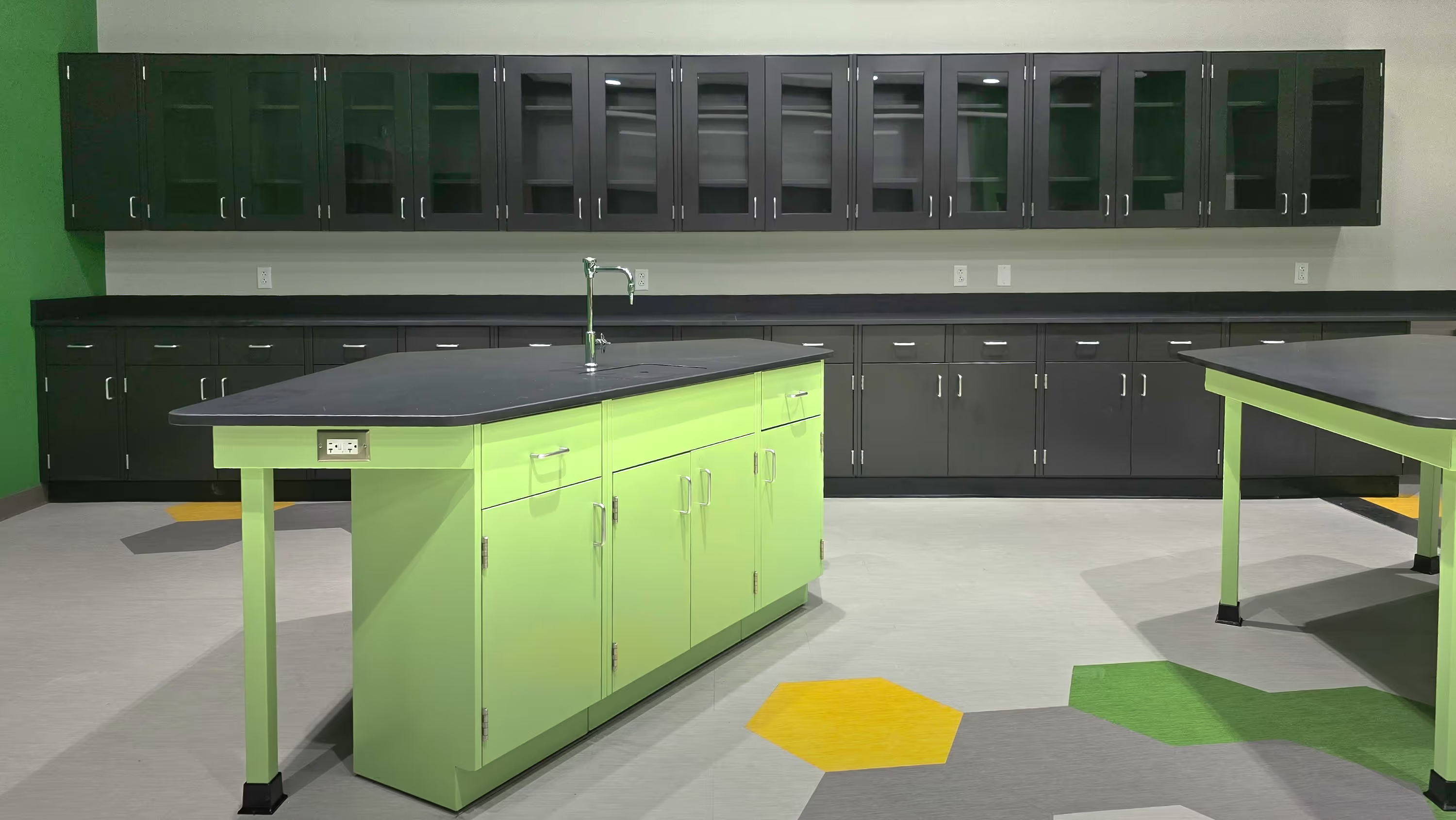
Plan the Layout Around Workflow and Flexibility
Once purpose and compliance are defined, layout becomes the deciding factor between a lab that works smoothly and one that constantly gets in its own way. The goal is simple: support how people move, work, store materials, and adapt over time.
Design Around How Work Actually Happens
Workflow beats aesthetics every time
- Benches, fume hoods, and equipment should follow the sequence of work
- Prep areas should sit close to use points
- High-traffic paths should avoid crossing hazardous zones
- Poor flow increases congestion, errors, and safety risks
Labs designed around real workflows—not assumptions—are easier to operate and maintain. This philosophy shows up across ICI Scientific’s lab design approach.
Use Clear Zoning to Organize the Space
Every zone has a job
- Work zones for active testing and experimentation
- Storage zones for chemicals, equipment, and supplies
- Circulation paths that allow safe movement and emergency access
- Support spaces for prep, waste handling, and utilities
Clear zoning improves safety, efficiency, and inspection readiness. You can see how zoning is applied across different environments in the ICI Scientific project portfolio.
Build in Flexibility From Day One
Labs change—layouts should too
- Research programs evolve
- Teaching curricula shift
- Equipment sizes and requirements change
- Funding cycles demand phased upgrades
Flexible layouts using modular casework and adaptable systems reduce the need for demolition and rework. Explore these adaptable solutions within ICI Scientific’s product lineup.
Adaptable Layouts Reduce Long-Term Costs
Future-proofing saves real money
- Fewer shutdowns during renovations
- Lower construction and relocation costs
- Faster reconfiguration for new projects
- Less disruption to operations
ICI supports adaptable design through coordinated planning tools, available in the resources library and reinforced by training programs.
Plan Layouts as Systems, Not Rooms
Flexibility comes from coordination
- Furniture, utilities, and equipment must move together
- Circulation and safety paths must stay intact after changes
- Layout decisions should support both current and future use
For guidance, examples, and ongoing insights, visit the ICI Scientific Blog or connect with local expertise via the dealer locator.
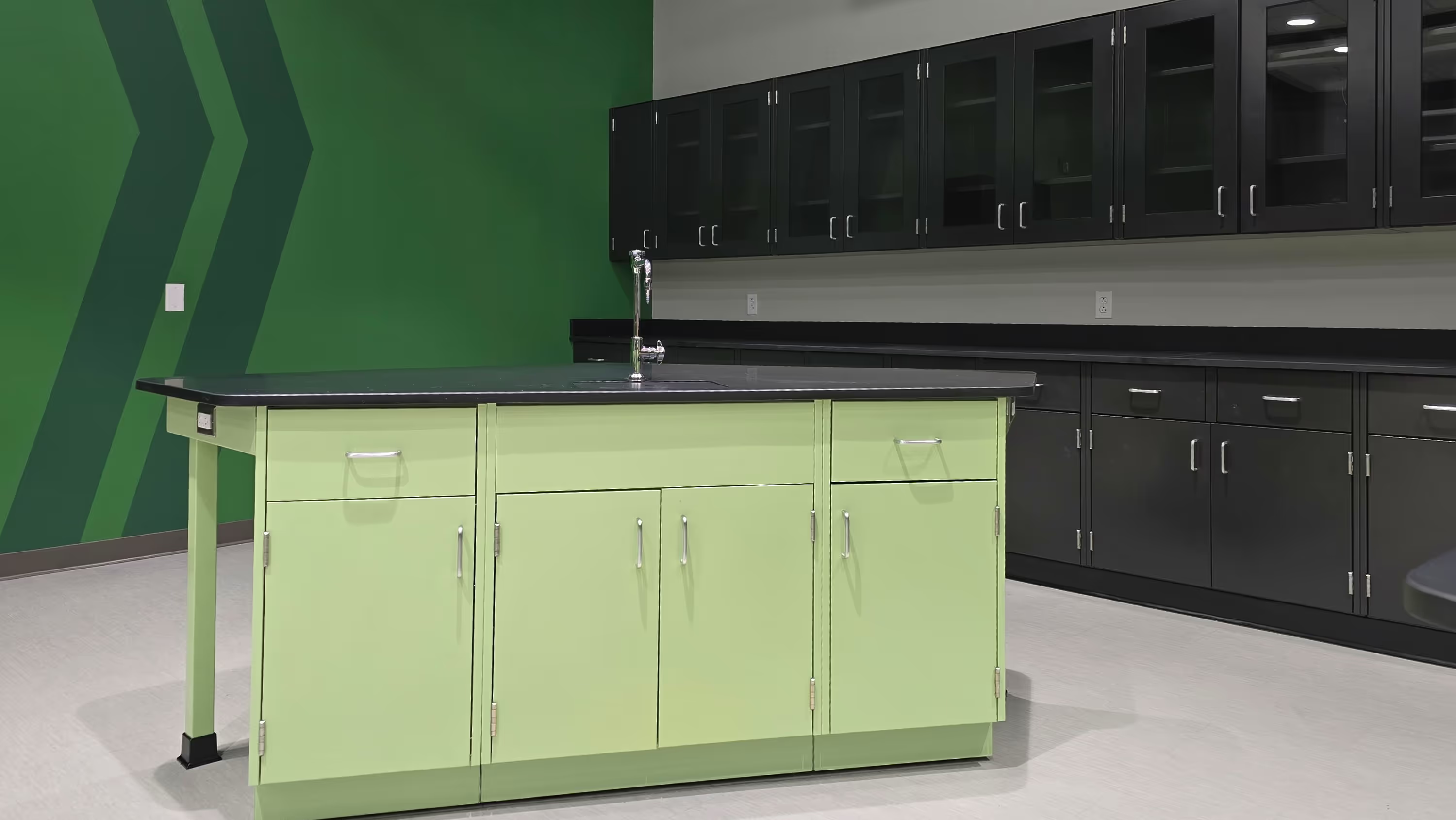
Coordinate Systems, Furniture, and Planning Resources
Strong lab design doesn’t come from picking parts in isolation. It comes from coordinating every system so the space works as one. When casework, fume hoods, utilities, and layouts are planned together, labs run safer, last longer, and cost less to maintain.
Systems Must Be Designed to Work Together
Independent selections create real problems
- Casework affects hood placement and service routing
- Work surfaces influence chemical compatibility and safety
- Utilities must align with equipment and workflow
- Layout decisions impact airflow, access, and compliance
Designing these elements separately often leads to clashes that require rework. ICI approaches lab planning as a coordinated system, not a collection of parts—a philosophy outlined in ICI Scientific’s design approach.
Furniture and Equipment Shape Infrastructure
Furniture decisions aren’t cosmetic
- Bench height affects ergonomics and ADA compliance
- Casework load ratings impact equipment placement
- Fume hoods require structural, mechanical, and electrical coordination
- Storage placement affects safety and efficiency
Seeing these elements function together in real environments helps clarify their interdependence. Explore integrated examples in the ICI Scientific project portfolio.
Planning Tools Reduce Risk and Redesign
Design clarity before construction saves money
- BIM and AutoCAD tools validate layouts early
- Utility conflicts are resolved before installation
- Safety clearances and access paths are confirmed
- Stakeholders align before decisions are locked
ICI supports this coordination through technical planning resources and structured training programs that help teams plan confidently.
Holistic Design Aligns Short-Term Needs With Long-Term Goals
The best starting point is system-level thinking
- Labs must meet today’s functional demands
- Designs should remain flexible for tomorrow’s changes
- Compliance, safety, and operations must align
- Poor coordination increases lifecycle cost and disruption
ICI Scientific delivers complete lab systems—casework, work surfaces, fume hoods, and coordinated layouts—designed to function together from day one. Learn more by exploring the full product ecosystem, following insights on the ICI Scientific Blog, or connecting with local expertise through the dealer locator.
For a systems-first starting point, visit ICI Scientific
related searches
how to design a lab layout
──────────────
laboratory design process steps
──────────────
lab design safety requirements
──────────────
modular lab casework benefits
──────────────
laboratory ventilation and fume hood placement


