
The Ultimate Guide to Fume Hoods
A fume hood is a laboratory ventilation device that captures and removes hazardous fumes, vapors, and particulates at the source. It protects users from inhalation exposure, supports regulatory compliance, and reduces facility risk. Fume hoods are necessary whenever chemical processes generate airborne hazards that require controlled airflow and containment.
What Is a Fume Hood and Why It’s Required
A fume hood isn’t a luxury item in a laboratory—it’s a primary safety system. Its job is simple to explain and critical to get right: keep hazardous airborne materials away from people and out of occupied space.
What a Fume Hood Does
Controlling exposure at the source
- Captures hazardous vapors, fumes, gases, and particulates generated during lab work
- Pulls contaminated air away from the user’s breathing zone
- Exhausts or filters air to reduce risk to occupants and facilities
- Acts as a containment barrier between people and chemical processes
When paired with proper casework and work surfaces, fume hoods form the core of a safe lab environment. You can see how these systems are integrated as part of complete lab solutions at ICI Scientific.
Why Fume Hoods Are Critical for Safety and Compliance
Protection, not convenience
- Prevents inhalation of toxic or flammable substances
- Reduces risk of chemical exposure injuries and long-term health effects
- Supports compliance with OSHA, NFPA, and ANSI safety standards
- Limits facility liability by controlling airborne hazards
In other words, fume hoods aren’t there to meet a checkbox—they exist because airflow control is one of the most effective ways to reduce laboratory risk. Facilities that treat fume hoods as optional often find out the hard way why they aren’t.
Where Fume Hoods Are Commonly Used
Across education, research, and industry
- Educational labs for chemistry instruction and demonstrations
- Research facilities handling solvents, acids, and reactive materials
- Industrial labs focused on formulation, testing, or quality control
Examples of how fume hoods are integrated into different lab types can be found in the ICI project portfolio.
When Fume Hoods Are Required vs. Recommended
Process-driven, not optional
- Required when working with volatile, toxic, corrosive, or flammable chemicals
- Required when standards or institutional policies mandate local exhaust ventilation
- Recommended when processes produce fumes, vapors, or airborne dust—even at low volumes
Choosing the right hood depends on the chemicals used, frequency of work, and overall lab design. ICI supports this process with planning resources, training, and fully integrated systems available through their product offerings.
For ongoing guidance and best practices, visit the ICI Scientific Blog or connect with local support using the dealer locator.

Main Types of Laboratory Fume Hoods
Not all fume hoods are built for the same job. The right choice depends on what chemicals are used, how often work is performed, and how the lab is designed. Below is a clear breakdown of the primary fume hood types, what they handle well, and where their limits begin.
Ducted Fume Hoods
Best for high-hazard, high-volume chemical use
- Exhaust air completely out of the building
- Designed for toxic, corrosive, and flammable vapors
- Common in chemistry, pharmaceutical, and industrial labs
- Provides the highest level of containment and flexibility
Limitations:
- Higher energy consumption
- Requires building exhaust infrastructure
- Less flexible for future relocation
Ducted systems are often seen in complex lab builds showcased in the ICI Scientific project portfolio.
Ductless Fume Hoods
Filtered containment for lighter chemical work
- Uses carbon or HEPA filtration instead of exhaust ducts
- Ideal for low-volume, well-defined chemical processes
- Easier to install and relocate
- Lower upfront infrastructure costs
Limitations:
- Not suitable for all chemicals
- Filters must be properly selected and maintained
- Performance depends on strict chemical compatibility
Understanding chemical profiles is critical when evaluating ductless options. ICI supports this selection process through planning resources and technical guidance.
High-Performance Fume Hoods
Safety with reduced energy demand
- Designed to operate safely at lower face velocities
- Reduces heating and cooling costs
- Improves airflow stability and containment
- Often paired with VAV systems
Limitations:
- Requires proper room airflow balance
- Must be installed and commissioned correctly
High-performance designs are commonly integrated into complete lab systems offered through ICI Scientific’s product lineup.
Specialty Fume Hoods
Engineered for specific hazards
- Acid digestion hoods
- Perchloric acid hoods
- Radioisotope hoods
- Biosafety and custom-process hoods
Limitations:
- Purpose-built and not interchangeable
- Requires careful planning and specification
Selecting specialty hoods typically involves collaboration between designers, safety teams, and manufacturers. Learn how ICI supports this process through design expertise and training and company background.
Matching Hood Type to Lab Activity
The chemicals dictate the equipment
- Volatile solvents require different control than acids
- Frequency of use affects airflow and durability needs
- Lab layout and casework integration influence hood placement
For continued guidance, industry updates, and best practices, explore the ICI Scientific Blog or connect with local experts using the dealer locator.
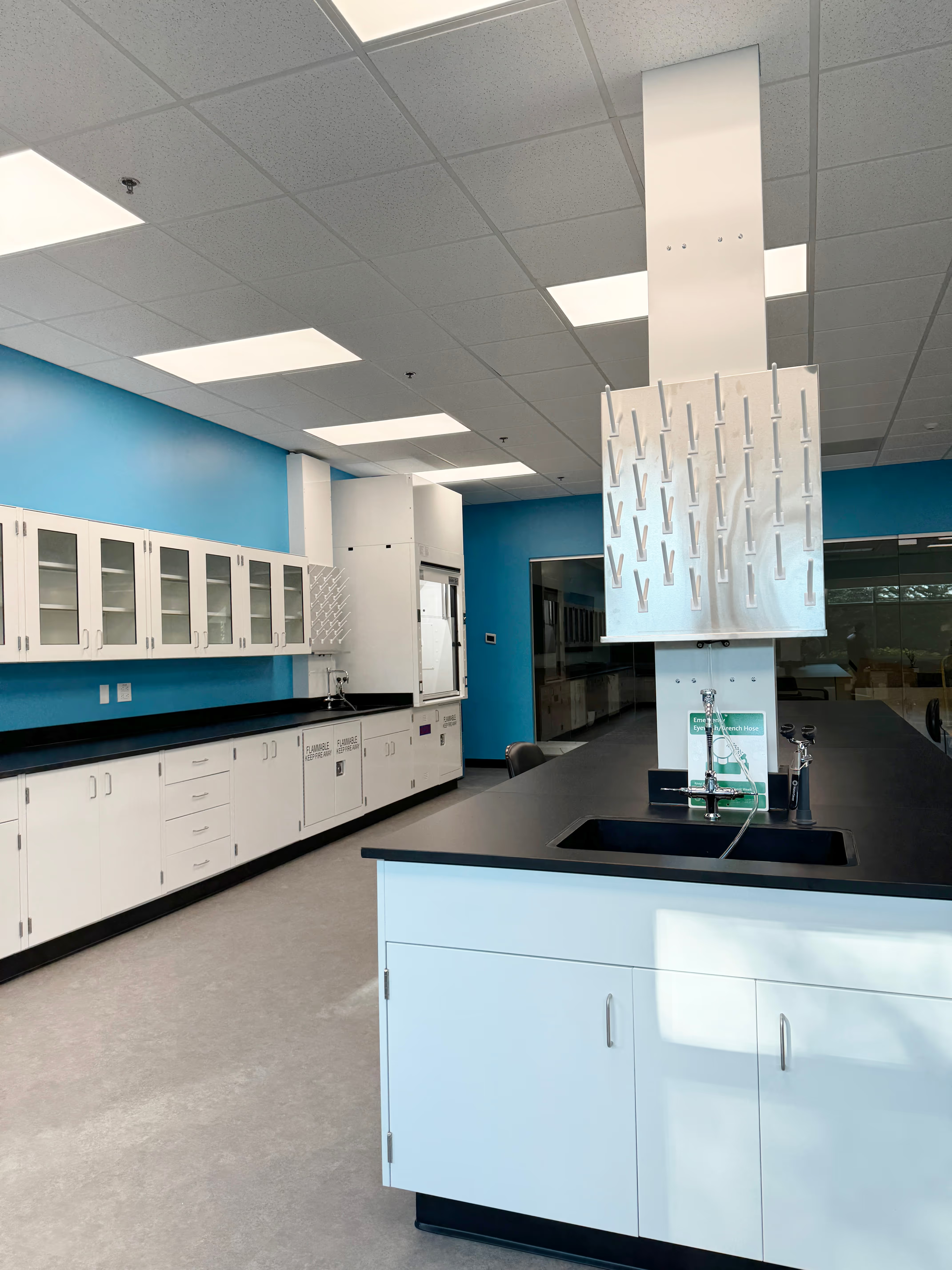
Key Performance and Safety Factors
A fume hood doesn’t keep people safe just because it’s installed. Performance depends on airflow, user behavior, placement, and ongoing testing. Miss one of those, and even the best hood becomes expensive furniture.
Face Velocity: Too Low Is Dangerous, Too High Is Unstable
Airflow must be controlled, not forced
- Face velocity measures how fast air moves into the hood opening
- Low velocity allows contaminants to escape
- High velocity creates turbulence and pulls vapors back toward the user
- Safe operation depends on consistent, tested airflow, not max fan speed
Proper face velocity is achieved through system design and commissioning, not guesswork. This is why performance data matters during planning, as shown in ICI Scientific lab system designs.
Sash Operation and User Behavior Matter
The sash is a safety device, not a window
- Lower sash heights improve containment
- Open sashes reduce airflow effectiveness
- Improper use defeats even well-designed systems
- Automatic sash controls help reduce user error and energy loss
Training is often the missing link. ICI supports safer operation through education and training resources that reinforce proper hood use.
Airflow Stability and Containment
Smooth airflow keeps contaminants inside
- Stable airflow prevents backflow and leakage
- Room air balance affects hood performance
- Nearby doors, supply diffusers, and traffic patterns disrupt containment
- Hood placement must be planned with the full lab layout
This is where integrated design matters. Proper casework and hood placement are addressed early using planning tools and technical resources.
VAV vs. CAV Systems
Control strategy affects safety and efficiency
- CAV (Constant Air Volume): Fixed airflow, simple, predictable
- VAV (Variable Air Volume): Adjusts airflow based on sash position
- VAV systems reduce energy use but require correct calibration
- Both systems must be tested and maintained
ICI helps labs evaluate these options through coordinated system planning found in the product ecosystem.
Testing, Inspections, and Ongoing Verification
Safety is proven, not assumed
- Hoods must be commissioned before use
- Routine inspections verify airflow and containment
- Testing confirms compliance with safety standards
- Documentation protects both users and facilities
For guidance on maintaining compliant environments, review insights on the ICI Scientific Blog or learn more about ICI’s expertise at ICI Scientific.
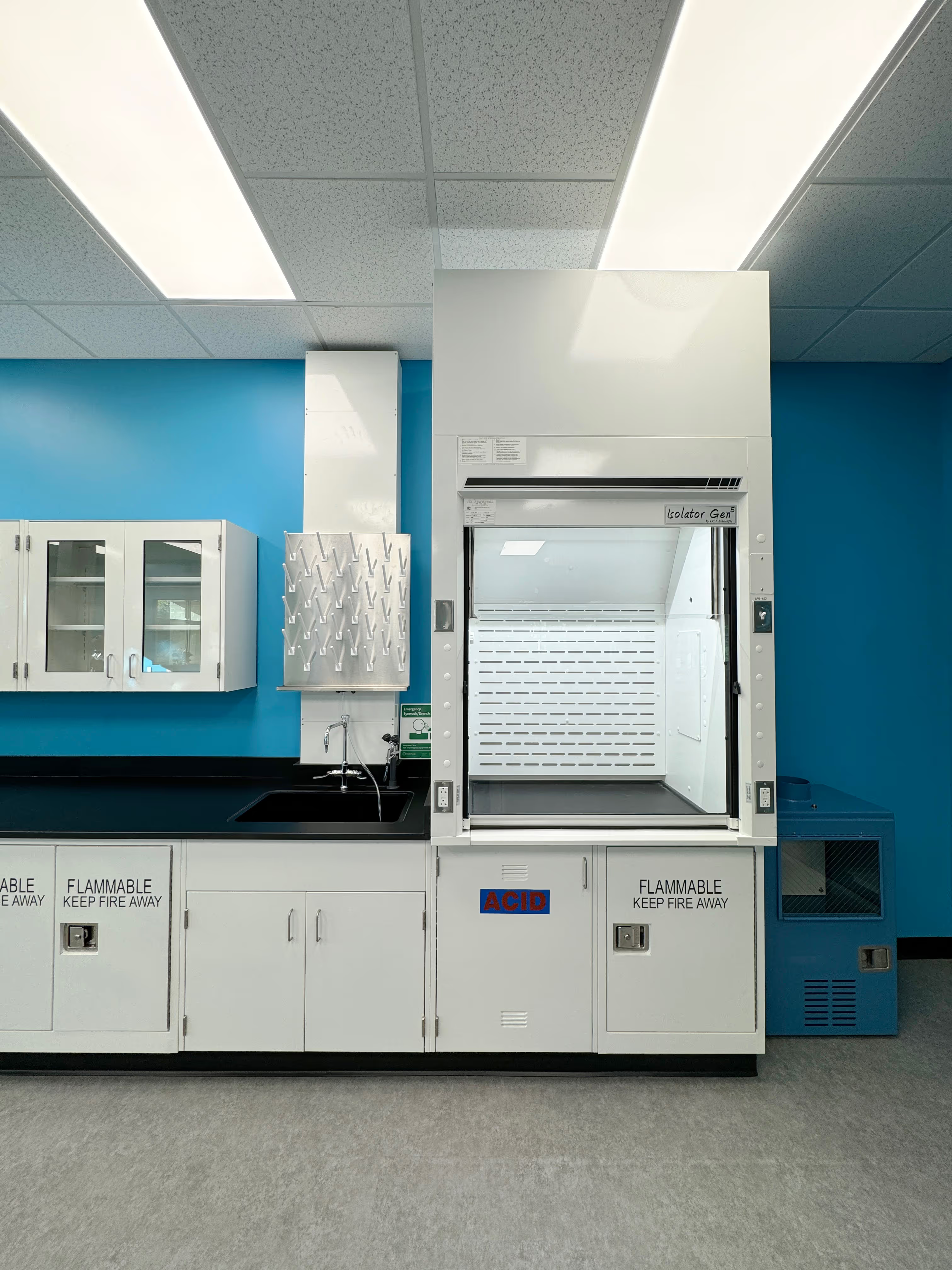
Selecting the Right Fume Hood for Your Laboratory
Choosing a fume hood isn’t about picking a model—it’s about matching protection to process. The safest laboratories start by evaluating what actually happens inside the hood and designing around that reality.
Start With the Chemicals and Processes
What you use determines what you need
- Volatile, toxic, or flammable chemicals require full exhaust solutions
- Acids, solvents, and specialty reagents each create different containment demands
- Frequency of use affects wear, airflow stability, and durability requirements
- Occasional use labs can differ significantly from high-throughput environments
Understanding these variables early prevents under-specifying critical safety equipment. ICI supports this evaluation through technical planning resources and system-level design expertise.
Consider Energy Efficiency and Operating Costs
Upfront cost is only part of the equation
- Exhaust volume impacts HVAC loads and utility costs
- High-performance and VAV systems can reduce long-term energy use
- Improper sizing leads to unnecessary operational expense
- Lifecycle costs often outweigh purchase price
Energy-conscious designs are commonly incorporated into integrated labs shown in the ICI Scientific project portfolio.
Account for Space, Layout, and Workflow
Hoods must fit the room, not fight it
- Clearance requirements affect placement
- Nearby doors, traffic patterns, and air supply impact performance
- Hood depth, width, and sash height influence ergonomics
- Layout must allow safe movement and unobstructed airflow
Proper integration requires coordination between the hood, cabinetry, and work surfaces—an approach reflected across the ICI product lineup.
Integration With Casework and Work Surfaces
Safety systems work best when designed together
- Work surfaces must resist the chemicals being used
- Casework must support hood loads and service connections
- Storage placement affects safety and efficiency
- Poor integration creates bottlenecks and hazards
ICI Scientific provides coordinated lab systems—fume hoods, casework, and work surfaces—designed as a unified solution. Learn more about their approach at ICI Scientific.
Match the Hood to Regulations and Real-World Constraints
The safest choice is the right one for your lab
- Regulatory requirements may mandate specific hood types
- Institutional policies often exceed minimum standards
- Design constraints influence viable options
- Selection should balance safety, compliance, and practicality
ICI supports this process through training programs, dealer coordination, and ongoing guidance shared on the ICI Scientific Blog.
related searches
fume hood types ducted vs ductless
──────────────
what is fume hood face velocity
──────────────
fume hood sash height best practices
──────────────
fume hood certification requirements
──────────────
how to choose a laboratory fume hood


